



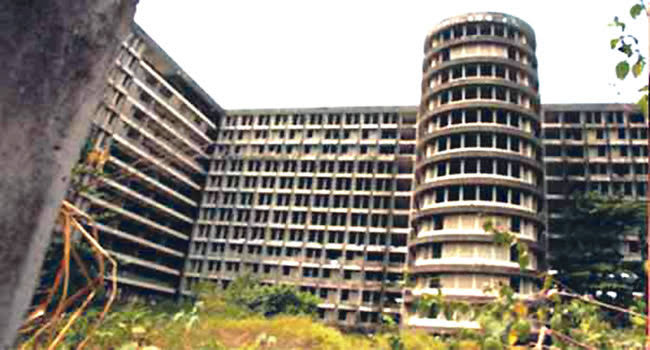
The Federal Government has identified approximately 250,000 housing units within abandoned projects across Nigeria that could potentially be recovered and brought back into the national housing supply.
The Minister of Housing and Urban Development, Muttaqha Rabe Darma, disclosed the figure in Abuja during the presentation of houses to 430 staff members of the Nigerian Midstream and Downstream Petroleum Regulatory Authority (NMDPRA).
According to the minister, the government is taking stock of abandoned housing developments as part of efforts to expand housing supply and address stalled residential projects.
Funding and Viability Behind Project Abandonment
Industry stakeholders identified poor funding and project viability among the factors contributing to the abandonment of housing developments.
The scale of the identified stock creates a potential recovery pipeline involving projects at different stages of completion. However, the condition, ownership structure, outstanding financial obligations and commercial viability of individual developments would determine whether they can be successfully reactivated.
Recovering viable abandoned projects could also reduce the time required to bring housing units to market compared with developing entirely new projects, particularly where land acquisition, foundations, structural works and basic infrastructure are already in place.
Why the Development Matters
For developers, financiers and public-sector housing agencies, the exercise shifts attention from new construction alone to the reactivation of existing housing assets.
→ Developers: Partially completed projects could provide opportunities for acquisition, restructuring, or joint-venture development where commercial viability can be established.
→ Financiers: Existing structures and infrastructure may provide a different risk profile from financing projects entirely from the ground up.
→ Government: Recovering viable abandoned developments could add to housing supply without requiring every unit to begin from a new land acquisition and construction cycle.
→ Contractors: Reactivation programmes could generate demand for structural completion, rehabilitation, infrastructure works and finishing packages.
The Federal Government’s next challenge will be determining how many of the identified 250,000 units are technically recoverable, financially viable and legally capable of being returned to construction.
Source: Federal Ministry of Housing and Urban Development; PUNCH.
Nomarc Market Signal:
Nigeria’s abandoned housing stock could represent a significant asset-recovery pipeline for the built environment, but converting the headline figure into actual housing supply will depend on project-level assessment, financing, ownership resolution, and construction viability.